You can usually cut your parking bill in half by booking ahead, adjusting your timing, or walking a few extra blocks. If you've been paying full price at the closest garage to your destination, you're spending more than you need to.
These six tactics for how to find cheap parking work in most cities. Some save a few dollars, others save $20 or more per trip. Pick the ones that fit your routine.
1. Book Ahead With a Prepaid Parking App
Prepaid parking apps let you reserve a spot before you leave the house, often at 30-50% below the drive-up rate. SpotHero is the biggest player here, with coverage in over 400 cities across the U.S. and Canada. ParkWhiz and BestParking are solid alternatives depending on your city.
The savings are real. A garage near Chicago's Millennium Park might charge $45 at the gate but $22 if you prepay through SpotHero a day in advance. In Manhattan, you'll see similar gaps around Midtown and the Financial District.
How it works: search your destination, compare nearby garages and lots, pick a time window, and pay through the app. You'll get a confirmation code or QR code to show when you arrive. Most reservations are fully refundable if you cancel a few hours ahead.
One thing to watch: prepaid spots usually lock you into a specific time window. If you stay past your reservation, you'll pay the difference at the drive-up rate. Give yourself a buffer.
2. Park During Off-Peak Hours
Parking garages charge based on demand, and demand follows a predictable pattern. Weekday mornings in downtown areas are the most expensive because commuters fill up spots by 9 AM. Evenings and weekends are cheaper in business districts, sometimes drastically so.
In cities like San Francisco, a downtown garage might charge $35 during business hours and $12 for an evening flat rate starting at 5 PM. Seattle's Pioneer Square garages run similar discounts after the work crowd clears out.
If you have flexibility on when you arrive, use it. A Saturday afternoon trip downtown often costs half of what the same spot charges on a Tuesday at noon.
3. Walk a Few Blocks From Your Destination
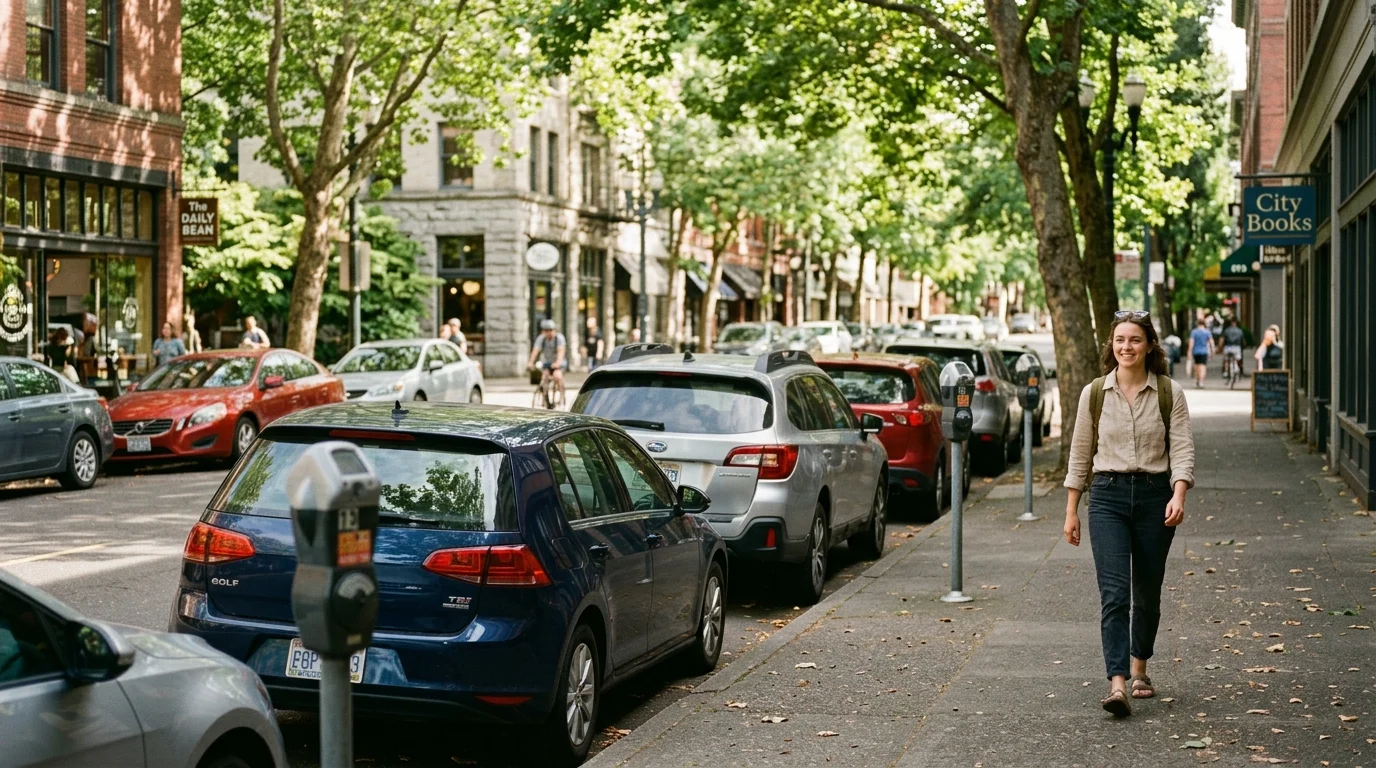
The garage right next to a stadium, airport, or tourist attraction almost always charges a premium. Walk three to five blocks in any direction and prices drop fast. This is one of the simplest ways to find cheap parking, and it works in every city.
In Nashville, garages on Broadway charge $30+ on a Friday night. Three blocks toward the Gulch, you'll find lots at $10-15. Same story in Austin near Sixth Street, Boston near Faneuil Hall, and Denver near Coors Field.
A five-minute walk saves real money. If you're heading to an area you don't know well, check SpotHero or Google Maps before you leave. Search parking near your destination, then drag the map outward to see cheaper options a few blocks away.
4. Know the Difference Between Garages and Surface Lots
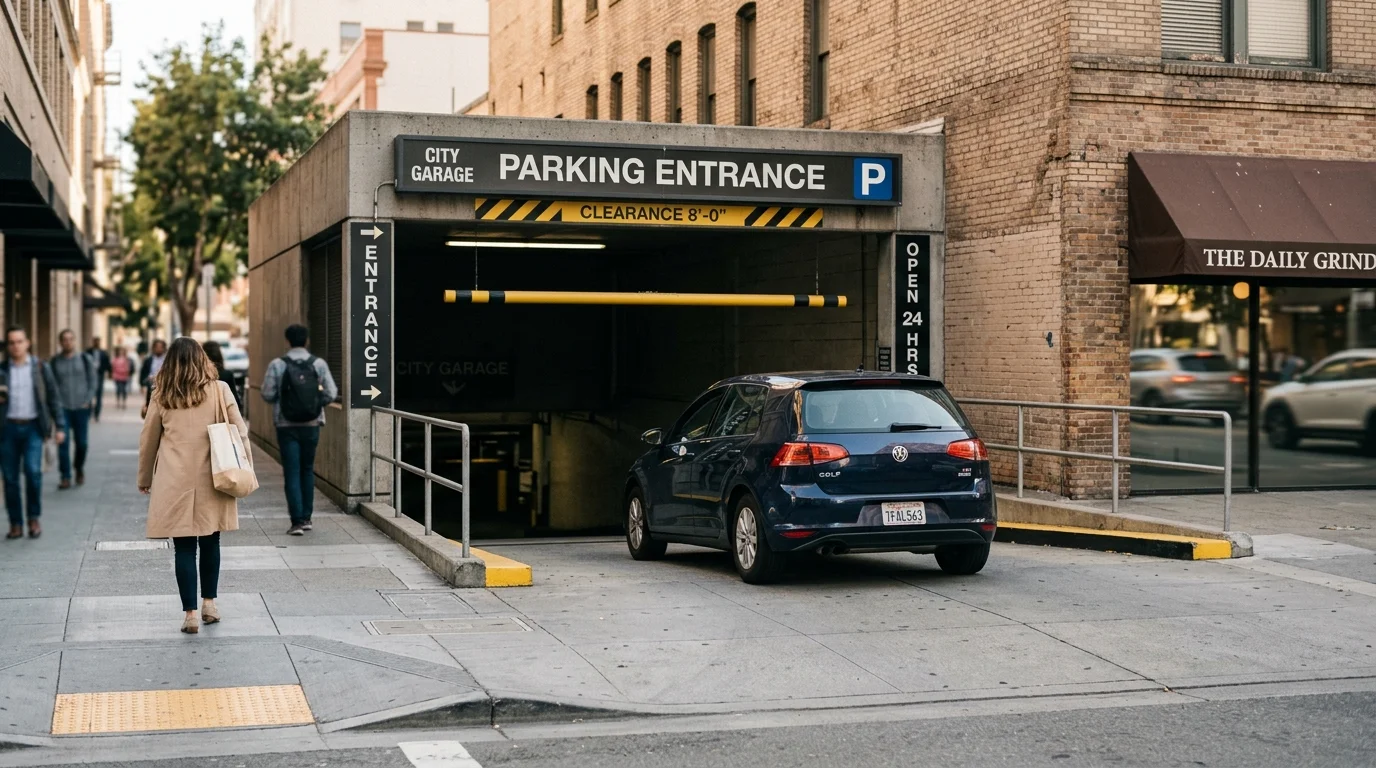
Parking garages are almost always more expensive than surface lots (open-air lots). A garage has higher operating costs, and that gets passed to you. In a busy city, a garage might charge $25 while the surface lot around the corner charges $12.
Surface lots do come with trade-offs. Your car sits in the open, exposed to weather and less surveillance than a garage. But for a daytime errand or a dinner out, the savings are usually worth it.
Here's a pricing pattern worth knowing: garages tend to charge by the hour with a daily max, while surface lots more often use a flat rate. If you're staying under two hours, the hourly garage rate might actually win. For longer stays, the flat-rate lot is almost always cheaper.
5. Get Strategic About Street Parking
Street parking is the cheapest option in most cities, and the meters aren't always as picked over as you'd expect. The trick is knowing where and when to look.
Most metered street parking has time limits (1-2 hours typically) and enforced hours. After enforcement ends, usually around 6 or 8 PM depending on the city, you can park for free. In many cities, Sundays are free all day.
A few things to check before feeding the meter:
- Read the signs carefully. Street cleaning schedules and permit zones can turn a legal spot into a ticket.
- Pay by app (ParkMobile, PayByPhone, or your city's official app) so you can extend your time remotely if your plans change.
- Check one or two blocks off the main road. Side streets fill up slower and sometimes have longer time limits.
- Residential neighborhoods near commercial areas sometimes have unrestricted free parking. Just respect driveways and posted rules.
In cities with app-based meters, you can sometimes see which blocks have open spots before you even get there. The ParkMobile app shows real-time availability in some zones.
6. Use Event-Day Alternatives
Concert nights, game days, and festivals are when parking prices spike the hardest. A garage that normally charges $15 might jump to $50 or more. You need a different plan on these days.
Park-and-ride is the most reliable option. Many cities run shuttle service from remote lots to stadiums and arenas. In Atlanta, MARTA stations outside the downtown core have free parking, and the train drops you a block from most venues. Houston's METRORail does the same for NRG Stadium events.
If you'd rather drive all the way in, look for parking at businesses that are closed during event hours. Church lots, office building garages, and retail plazas near venues often sell event parking at rates well below the stadium garages. SpotHero lists many of these on event days.
Another option: park at a restaurant you plan to eat at before or after the event. Many restaurants near venues offer validated or free parking for diners. You save on parking and skip the post-event traffic jam by eating while the crowds clear out.
How Much Can You Actually Save?
Here's a realistic breakdown of savings by tactic:
| Tactic | Typical Savings |
|---|---|
| Prepaid app (SpotHero, ParkWhiz) | 30-50% off drive-up rate |
| Off-peak timing | $10-25 per visit |
| Walking a few blocks | $10-20 per visit |
| Surface lot vs. garage | $5-15 per visit |
| Street parking | $5-30+ per visit |
| Park-and-ride on event days | $20-40 per event |
If you park downtown twice a week and save even $10 each time, that's over $1,000 a year. Small changes add up.
Your Next Step
Download SpotHero (or whichever app covers your city best) and search for parking near a place you go regularly. Compare the prepaid prices to what you usually pay. Most people are surprised by the gap. Next time you're heading to a game or a show, book your spot the day before and keep that extra $20 in your pocket.