The best cowboy boots for beginners are made from smooth cowhide leather, have a round or snip toe, and sit on a walking heel. That combo gives you comfort, durability, and a classic look without spending more than $200-300 on your first pair.
Picking cowboy boots feels overwhelming when you're starting from zero. Toe shapes, heel heights, leather types, pull-on vs. zip. This guide breaks it all down so you can walk into a store (or order online) and know exactly what you're looking at.
Leather Types: Start With What You Know
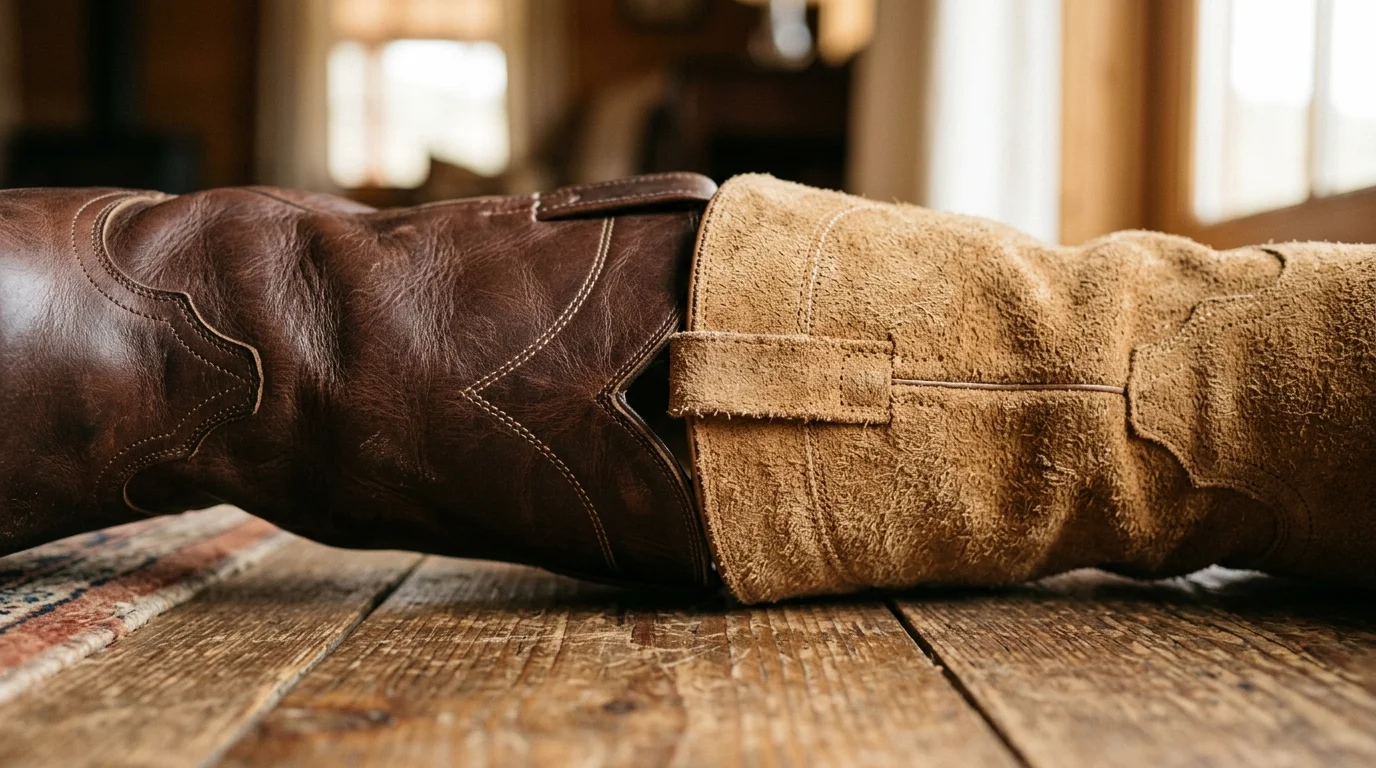
Cowhide is the default for a reason. It's tough, it breaks in without a fight, and it looks good whether you're wearing jeans or a sport coat. Full-grain cowhide develops a patina over time that makes the boots look better with age. This is what most beginners should buy first.
Calfskin is softer and thinner than standard cowhide. It feels broken-in almost immediately. The trade-off is that it scuffs more easily and won't hold up as well to daily rough use. Great for boots you'll wear to dinners and weekends out, not for ranch work.
Suede and roughout have a napped, textured finish. They look more casual and pair well with relaxed outfits. The downside: they stain easily and need a protective spray. If you live somewhere rainy, suede probably shouldn't be your first pair.
Exotics (ostrich, lizard, caiman, full-quill ostrich) are the flashy option. Ostrich is surprisingly soft and forgiving on your feet. Lizard and caiman have that unmistakable texture. But exotics cost $400-800+, and they're not where most beginners should start. Get your first pair in cowhide, figure out what fit and style you like, then upgrade later if you want.
Toe Shapes: More Than Just Looks
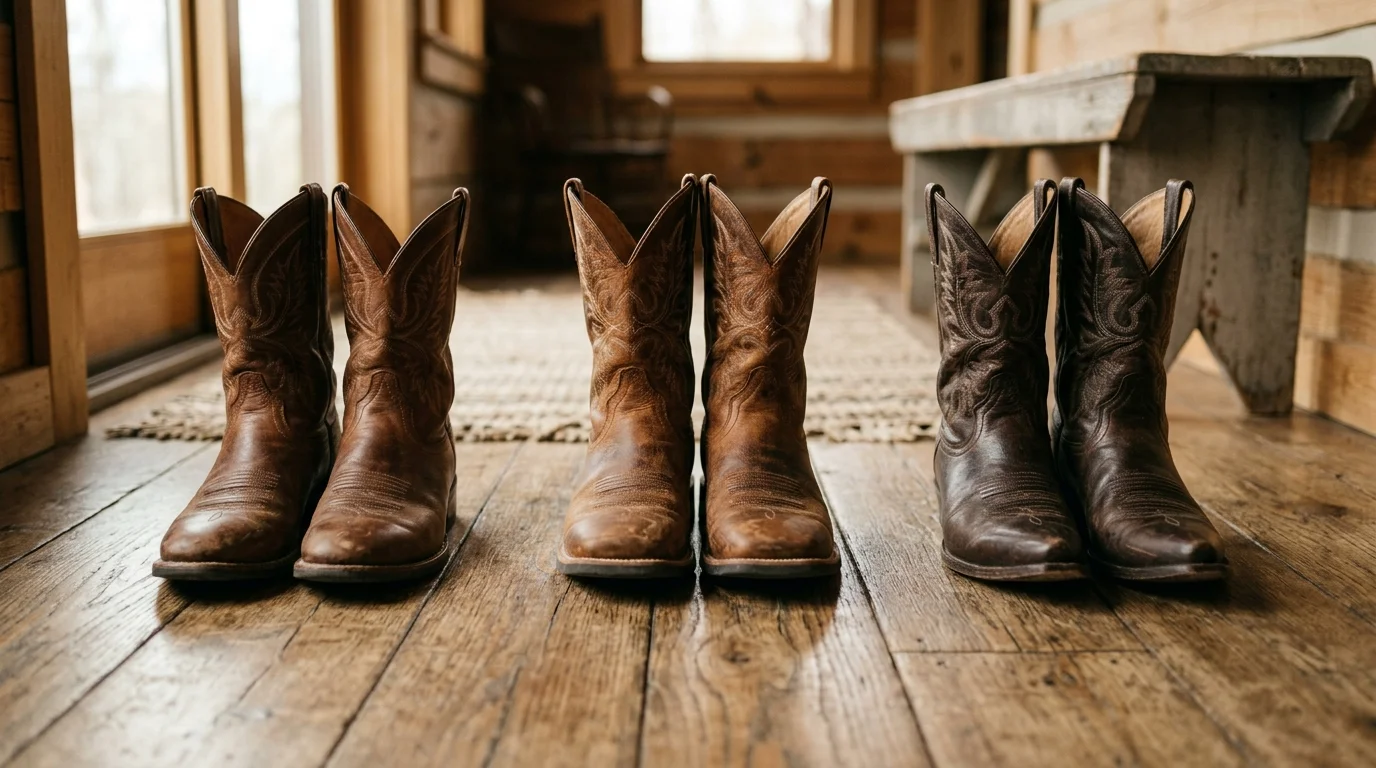
The toe shape changes how the boot looks on your foot, how it fits, and what it's best suited for. Here's the honest breakdown:
Round toe is the most comfortable shape for most foot types. There's plenty of room in the toe box, and the silhouette works with everything from jeans to chinos. If you're not sure what you want, round toe is the safe pick.
Snip toe (sometimes called “modified round”) tapers slightly at the end. It's a little sleeker than round toe but still comfortable for most people. This is the most popular shape right now and splits the difference between classic and modern.
Pointed toe is the traditional cowboy boot look. It slides into stirrups easily (that's the original purpose). On foot, it makes your legs look longer. The fit can feel tight across your toes if you have wide feet, so try before you commit.
Square toe was huge in the 2000s, especially in working ranch boots. It gives the most room in the toe box, which makes it popular with people who are on their feet all day. The look is polarizing. Some people love it, some think it's dated. If comfort is your top priority and you're wearing them for work, square toe delivers.
Heel Heights: Walking vs. Riding vs. Fashion
Cowboy boot heels generally fall into three categories, and the one you pick matters more than most beginners expect.
| Heel Type | Height | Best For |
|---|---|---|
| Walking heel | 1″ – 1.5″ | Everyday wear, long days on your feet |
| Cowboy heel | 1.5″ – 2″ | Traditional look, moderate comfort |
| Riding heel | 2″ – 2.5″ | Horseback riding, style-forward outfits |
| Fashion/underslung | 2.5″+ | Dress boots, going out |
If you've never worn heeled boots before, a walking heel (around 1.5 inches) is the move. You won't feel off-balance, and you can wear them all day without your feet screaming by 3 PM. A standard cowboy heel at 1.75 inches works too, but taller than that takes some getting used to.
Riding heels are angled to lock into a stirrup. They look great, but walking long distances in them gets uncomfortable fast. Save those for when you know what you're doing (or actually ride horses).
How Much Should You Spend on Your First Pair?
You can find cowboy boots at every price point from $50 to $5,000. For a first pair, the sweet spot is $150-300. Below that, you're usually getting cheap leather that won't break in well and construction that falls apart within a year. Above that, you're paying for exotics, heritage branding, or handmade details that don't matter until you know what you like.
Here's what your money gets you at each level:
- Under $100: Bonded leather, glued soles, stiff fit. Fine for a costume. Not great for regular wear.
- $150-250: Solid full-grain leather, Goodyear welt or similar construction, comfortable out of the box. This is where most beginners should land.
- $250-400: Premium leathers, better linings, resoleable construction. Boots you can wear for 5-10 years.
- $400+: Exotics, handmade, or heritage brands. Worth it once you know your size, style, and preferences.
Why Tecovas Is Worth a Look (and Other Good Options)
Tecovas has become one of the most recommended brands for first-time boot buyers, and for good reason. They started as a direct-to-consumer brand (now also in select western retailers), which keeps prices lower than competitors with similar materials. Their calfskin and cowhide options start around $295-345, break in quickly, and the construction is solid. They offer free returns and exchanges within 30 days if the fit isn't right.
The Cartwright (round toe, walking heel, available in cowhide and goat) and the Johnny (round toe, suede with a 1.5-inch heel) are two of their best-sellers for beginners. Both are comfortable after a short break-in and work with casual or slightly dressed-up outfits.
Tecovas isn't the only option in this range, though. Ariat makes durable boots with modern comfort features like gel-cushion insoles, typically $190-290. Lucchese's entry-level line starts around $395 and gives you a taste of premium craftsmanship. And if you want something more affordable to test the waters, Thursday Boot Company's western styles sit around $200.
How Cowboy Boots Should Fit
Cowboy boot sizing is different from sneaker sizing, and it trips up almost every beginner. Here's what to know.
Your heel should slip about a quarter to half inch when you walk. This feels wrong if you're used to sneakers, but it's normal. The leather sole needs to flex and mold to your foot. After a week of wear, the slipping goes away.
The ball of your foot (the widest part) should sit at the widest part of the boot. If it doesn't, you're in the wrong size. Width matters as much as length with cowboy boots, so look for brands that offer D (standard) and EE (wide) widths.
Try boots on in the afternoon when your feet are slightly swollen. Wear the socks you'll normally pair with them (mid-calf boot socks, not athletic ankle socks). And give them 3-5 days of wear before deciding they don't fit. Leather molds to your foot in ways that synthetic materials can't.
Pick Your First Pair and Wear Them
The biggest mistake beginners make is overthinking it. You don't need the perfect boot. You need a good boot that fits well and gets worn. Cowhide, round or snip toe, walking heel, $200 range. That's your starter formula.
Wear them with jeans for a week straight. You'll know within a few days whether cowboy boots are for you. Most people who try a solid pair don't stop at one.