
The fastest way to choose a supplement brand is to flip the bottle around and read the back. A trustworthy brand will show you exactly what's inside, how much of each ingredient you're getting, and who tested it. A sketchy one hides behind vague labels and big promises.
Roughly 80,000 supplements sit on U.S. shelves right now, and the FDA doesn't approve any of them before they're sold. That means the work of picking a safe, effective product falls on you. Here's how to do it without a chemistry degree.
Look for Third-Party Testing First
Third-party testing means an independent lab checked the product to confirm what's on the label is actually in the bottle. The brand pays for the testing, but the lab has no reason to fudge the results. It's the single most important thing to look for.
Three certifications matter most:
- NSF International (specifically NSF Certified for Sport) tests for label accuracy and screens for over 270 banned substances. This is the gold standard for athletes, but it's good for everyone.
- USP Verified means the U.S. Pharmacopeia confirmed the product contains what it claims, at the listed potency, and will dissolve properly in your body.
- ConsumerLab.com independently buys products off store shelves and tests them. Their seal means the product passed without the brand even knowing it was being tested.
If a bottle doesn't carry at least one of these seals, that doesn't automatically make it bad. But it means you're trusting the company's own word that the product is what it says. Some smaller brands do in-house testing honestly. Plenty don't.
What GMP Certification Actually Means
You'll see “GMP Certified” or “cGMP Compliant” on a lot of supplement bottles. GMP stands for Good Manufacturing Practices, and it's a set of FDA standards for how a supplement is made, stored, and packaged.
Think of it this way: third-party testing checks the finished product. GMP checks the factory. A GMP-certified facility follows rules about cleanliness, ingredient verification, equipment calibration, and staff training. It doesn't guarantee the supplement works, but it means the pill in your hand was made in a controlled, inspected environment.
Technically, all supplement manufacturers are required to follow GMP rules. In practice, the FDA can't inspect every facility every year. Brands that go out of their way to get third-party GMP audits (from NSF or similar organizations) are showing extra effort.
How to Read a Supplement Facts Panel
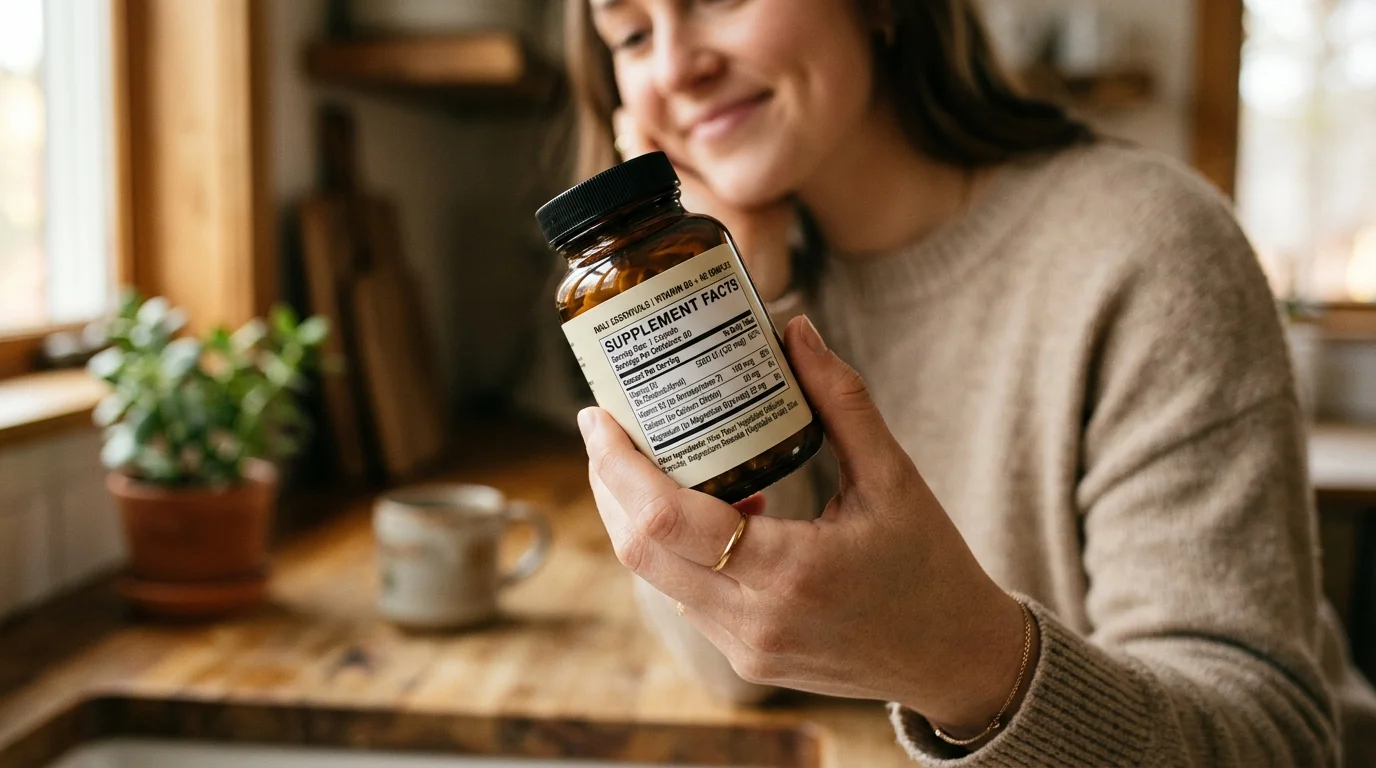
The supplement facts panel is where brands can't hide. Here's what to look at:
Serving size and servings per container. Some brands list impressive-looking doses per serving, then set the serving size at 3 or 4 capsules. Check how many pills you'd actually need to take daily and whether the bottle lasts a week or a month.
Ingredient amounts. Every active ingredient should have a specific dose listed in milligrams, micrograms, or IUs. If a product lists “Vitamin D” without a number next to it, that's a problem. You need to know how much you're getting to compare it against recommended daily values.
% Daily Value. This column shows how the dose compares to the recommended daily intake. 100% DV means it covers the full recommendation. 5,000% DV for a B vitamin might sound alarming, but some B vitamins are water-soluble and excess passes through your body. Fat-soluble vitamins like A, D, E, and K are a different story. Mega-doses of those can build up and cause real harm.
“Other ingredients.” This section lists fillers, binders, coatings, and flow agents. A short list here is usually better. Watch for added sugars, artificial colors, or allergens you're sensitive to.
Red Flags That Should Make You Put the Bottle Back
Not every bad supplement is obvious. But a few patterns show up again and again in low-quality products.
Proprietary blends. This is the biggest one. A “proprietary blend” means the company lists a group of ingredients together with a combined total weight, but doesn't tell you how much of each ingredient is in the mix. So a “Focus Blend: 500mg” could be 490mg of cheap filler and 10mg of the ingredient you actually wanted. Legitimate brands list every ingredient with its own dose.
Miracle language. Words like “cures,” “treats,” or “eliminates” on a supplement label are actually illegal under FDA rules. Supplements are allowed to make structure/function claims (“supports immune health”) but not disease claims (“prevents cancer”). If a label makes disease claims, the company is either ignorant of regulations or doesn't care. Neither is a good sign.
No contact information. A reputable brand puts its address, phone number, or website on the bottle. If you can't figure out who made the product, skip it.
Mega-dose everything. More isn't always better. A multivitamin with 10,000% DV of every vitamin isn't more effective. Your body can only absorb so much. Excess fat-soluble vitamins get stored and can become toxic. A quality brand formulates doses based on research, not on making the numbers look impressive.
Where You Buy Matters Too
Counterfeit supplements are a real problem on third-party marketplaces. A 2023 study found that a significant percentage of supplements sold by third-party sellers on major platforms failed purity tests or contained different ingredients than listed. Buying directly from a brand's website or from an authorized retailer reduces this risk.
Brick-and-mortar stores like pharmacies and health food shops generally have better supply chain controls than random online sellers. If you do buy online, stick to the brand's own store, or retailers that are specifically authorized to sell the product.
Brands like Aurox Health are examples of companies that make their testing results and certifications easy to find before you buy. That kind of transparency is what you should expect from any supplement brand.
A Quick Checklist Before You Buy
Before you add any supplement to your cart, run through these questions:
- Does it have a third-party testing seal (NSF, USP, or ConsumerLab)?
- Can you see the exact dose of every ingredient on the label?
- Are the doses reasonable, or is everything at 5,000%+ DV?
- Is the company's name and contact info clearly listed?
- Does the label make realistic claims, or does it promise miracles?
- Are you buying from the brand directly or an authorized seller?
If you answered “no” to more than one of these, look for a different product. There are enough good options out there that you don't need to gamble.
What About Price?
Cheap supplements aren't always bad, and expensive ones aren't always good. But price can be a clue. Third-party testing, GMP-audited facilities, and quality raw ingredients cost money. If a product is dramatically cheaper than comparable brands, ask yourself what's being cut.
A fairer way to compare prices is cost per serving, not cost per bottle. A $30 bottle with 30 servings costs $1/day. A $20 bottle with 15 servings costs $1.33/day. The cheaper bottle is actually more expensive to use.
Don't let price be the only factor. A supplement you take every day should be one you trust. Spending an extra $10/month for a verified, transparent brand is worth it for something going into your body daily.
Your Next Step
Pick one supplement you're currently taking and flip the bottle over. Check for a third-party testing seal, read the supplement facts panel, and look for any red flags from this guide. If it doesn't pass the checklist, start researching a replacement. Your body deserves to know what it's getting.