You need a bed, a way to cook, and a few basics for the bathroom. That's it for week one. Everything else can wait, and buying too much too soon is one of the most common (and expensive) mistakes new apartment renters make.
If you're figuring out what to buy for a new apartment, this priority list breaks it down by timeline. We'll cover what you actually need on move-in day, what to add in your first month, and what's fine to put off for a few months until you've settled in and know how you use the space.
Week 1: The Stuff You Can't Sleep Without (Literally)
Your first week is about survival, not style. Don't order a single decorative item until you've handled these basics.
Bed and Bedding
This is the single most important purchase. Sleeping on an air mattress or a bare floor for “just a few nights” has a way of turning into two miserable weeks. Get a mattress, a bed frame (even a simple platform frame for $100-150), sheets, and at least two pillows.
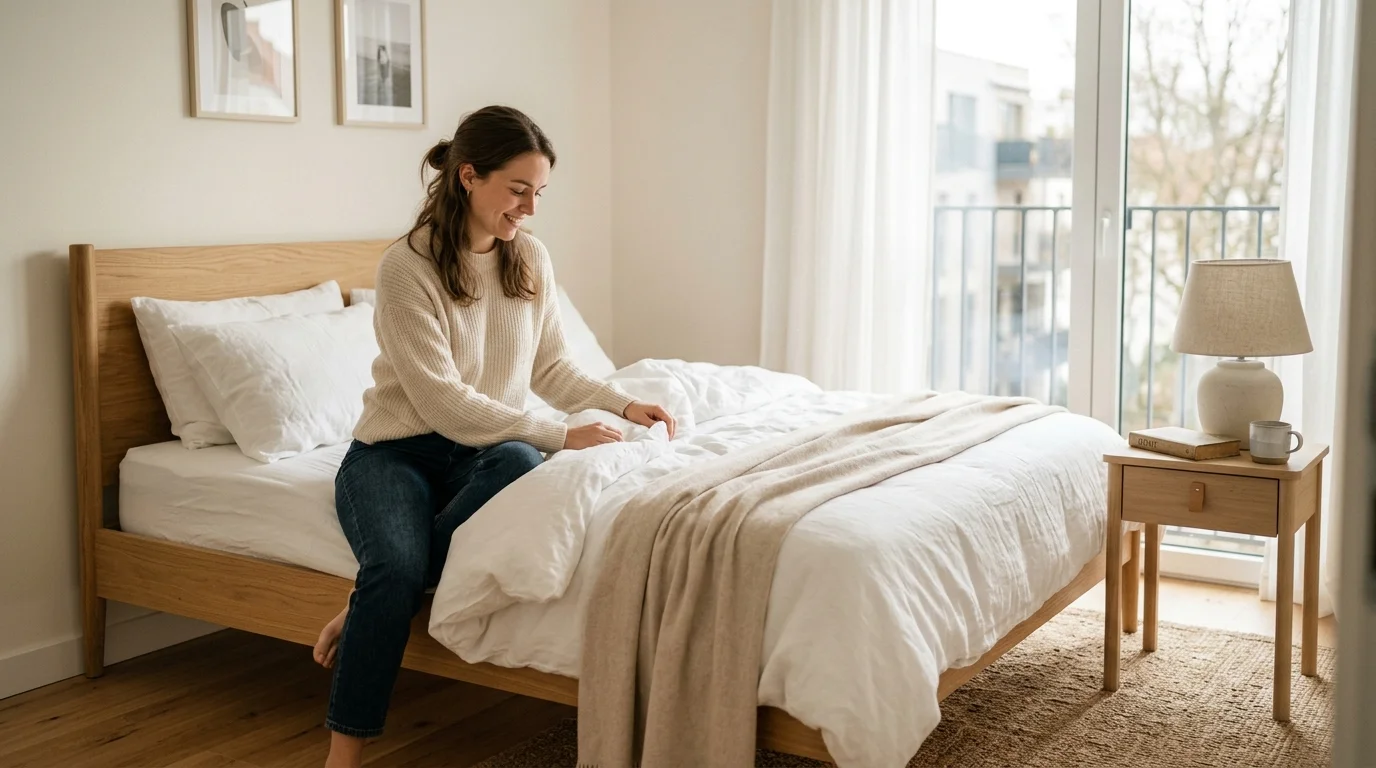
Budget around $300-600 for a decent mattress-in-a-box and a basic frame. Wayfair usually has good options in that range, and they deliver fast. You can upgrade later, but a solid queen mattress now will last you years.
Bathroom Basics
You'll want these on move-in day, not the day after:
- Shower curtain, rings, and a liner (apartments almost never include these)
- Two bath towels and a hand towel
- Toilet paper (seriously, don't forget this one)
- Bath mat
- Basic toiletries and a soap dispenser
All of this should cost under $50. Pick it up at a Target or drugstore on your way to the apartment.
Kitchen Starter Kit
You don't need a full kitchen setup yet. You need enough to feed yourself without ordering takeout three times a day. Here's the short list:
- One pot and one pan (a 3-quart saucepan and a 10-inch skillet cover most meals)
- A spatula, a wooden spoon, and a knife that actually cuts
- Two plates, two bowls, two mugs, two sets of silverware
- A cutting board
- Dish soap and a sponge
- Paper towels and a trash can with bags
That's roughly $40-70 at any big box store. Resist the urge to buy a 24-piece cookware set right now. You'll figure out what you actually cook in the first few weeks, and then you can fill in the gaps.
Other Week 1 Essentials
- Lighting. Many apartments only have overhead lights in the kitchen and bathroom. A $15 floor lamp for the bedroom and living room makes a huge difference.
- Cleaning supplies: all-purpose spray, paper towels, a broom, and trash bags. You'll want to clean before you unpack.
- A phone charger long enough to reach your bed from the nearest outlet. Small thing, big quality-of-life boost.
- Curtains or temporary blinds for the bedroom if your windows face a street or get morning sun.
Your total for week one should land somewhere between $500 and $900, with the mattress being the biggest chunk. Everything else is small stuff you can grab in one or two shopping trips.
Month 1: Making It Feel Like Home
Once the basics are handled, you'll start noticing what's missing. This is when you add comfort and function to the space. Don't rush it. Live in the apartment for a couple weeks first so you know where you actually sit, eat, and spend time.
A Sofa or Loveseat

This is probably your second biggest purchase after the mattress. For a first apartment, plan on spending $400-800 for something that looks decent and won't fall apart in a year. Wayfair has a big selection in that range, and you can filter by size if you're working with a smaller living room.
Measure your space before you order. Measure the doorways too. A sofa that doesn't fit through the front door is a problem you don't want to solve on delivery day. If your apartment has tight hallways, a loveseat or a two-piece sectional is often a smarter call than a full three-seater.
A Place to Eat
Eating on the couch gets old fast. You don't need a formal dining table. A small bistro table with two chairs works for most apartments and costs $100-200. If you have a kitchen counter with bar height, two stools ($50-80 each) do the same job and take up less space.
If you're comparing options, our Wayfair vs IKEA comparison covers which store is better for different furniture categories.
Storage You'll Actually Use
Apartment closets are almost always too small. Pick up one or two of these in your first month:
- A bookshelf or cube organizer ($30-80) for the living room or bedroom
- Under-bed storage bins if your bed frame has clearance
- A shoe rack or over-the-door organizer for the entryway
- Drawer organizers for the kitchen junk drawer (it'll happen)
Don't buy storage solutions before you know where the clutter actually collects. Wait two weeks, see where stuff piles up, and then buy exactly what you need.
A Few Kitchen Upgrades
By now you've cooked enough to know what's missing. Common month-one additions:
- A coffee maker or electric kettle ($20-40)
- A baking sheet and a second pan
- Food storage containers (get a matching set, not a random collection)
- A colander and a mixing bowl
- A can opener (you'll forget this until you need it)
Month one spending usually runs $600-1,200, depending on the sofa. If the budget's tight, the sofa can slide to month two. You survived without one this long.
Month 3+: The Nice-to-Have Stuff
Here's where most people go wrong: they buy all this stuff in week one and spend $3,000 before they've even figured out where to put the remote. These items matter, but they can absolutely wait.
Rugs
A living room rug makes hardwood and tile floors feel warmer and quieter. But you should pick it after you have your sofa, because the rug size depends on the furniture layout. A 5×7 rug runs $50-150 and anchors a small seating area. Go bigger (8×10) if the room can handle it.
Wall Art and Decor
Blank walls are fine for a while. Waiting a few months lets you figure out what you like instead of buying filler art just to cover the white. When you're ready, pick two or three pieces max for the main room. Less is more in a small apartment.
Check your lease before you hammer nails. Most apartments allow small picture hooks but charge you for large holes. Command strips are a safe bet for anything under 5 pounds.
Extra Furniture
A coffee table, a nightstand, a TV stand, an accent chair. These are all nice, and none of them are urgent. Buy them one at a time as you find pieces you actually like, not because you feel like the room looks empty.
If you're watching for deals, our Wayfair sales guide tracks the best times to buy furniture throughout the year. Way Day (Wayfair's biggest sale) runs twice a year, in late April or early May and again in October, and knocks 40-70% off furniture.
Upgraded Kitchen Gear
After three months of cooking, you'll know if you need a stand mixer or a slow cooker. You'll know if you want a spice rack or if you barely cook at all. Let your habits drive these purchases, not a Pinterest checklist.
How Much You'll Actually Spend
Here's a realistic budget range for furnishing a one-bedroom apartment from scratch:
| Timeline | Key Items | Budget Range |
|---|---|---|
| Week 1 | Bed, bedding, kitchen starter, bathroom, lamps, cleaning | $500-900 |
| Month 1 | Sofa, eating area, storage, kitchen upgrades | $600-1,200 |
| Month 3+ | Rug, wall art, coffee table, extra furniture, decor | $300-800 |
Spreading purchases out like this has two benefits. First, it keeps you from blowing your entire moving budget in one weekend. Second, you make better choices when you've lived with the empty space and know exactly what you need.
Three Mistakes to Avoid
Buying a full matching furniture set. Those “7-piece living room packages” look like a deal, but they make your apartment look like a hotel lobby. Mix pieces from different places. It looks more personal and you can replace things one at a time.
Skipping measurements. Write down the dimensions of every room, every doorway, and every window before you buy anything bigger than a lamp. Tape a floor plan if you need to. Returns on oversized furniture are a pain.
Forgetting about the entryway. You need somewhere to drop keys and shoes the moment you walk in. A small tray on a shelf and a shoe rack or mat cost almost nothing but keep the apartment from looking chaotic.
Your Move-In Game Plan
Before you sign for the keys, order your mattress so it arrives on move-in day or the day after. Grab bathroom and kitchen basics in one store run. Set up the bedroom first, because by the end of moving day, the only thing you'll care about is collapsing into a real bed.
After that, slow down. Live in the space for a week before buying furniture. Measure everything. And give yourself permission to have an empty-looking apartment for a month or two. You'll end up with a place that actually fits how you live, not a rushed collection of things you sort of liked in the store.