The best promotional giveaway items are the ones people actually use. Drinkware, tote bags, and quality notebooks get kept for months. Cheap pens and keychains? They hit the trash before the recipient leaves the parking lot.
That difference matters more than you'd think. A branded water bottle that sits on someone's desk for a year can generate over 1,400 impressions, while a keychain that gets tossed in a junk drawer does almost nothing. If you're spending money on promotional items, you want to pick the ones that stick around.
What People Keep vs. What They Toss
Industry data paints a clear picture. About 53% of people throw away a promotional item within a year if they don't find it useful. But useful items? Those get kept for 5+ years in some cases.
Here's how the most common giveaway categories stack up:
| Item Type | Avg. Time Kept | Cost Per Impression |
|---|---|---|
| Outerwear (jackets, vests) | 16+ months | $0.003 |
| T-shirts | 14 months | $0.005 |
| Bags and totes | 11 months | $0.005 |
| Drinkware (bottles, mugs) | 12 months | $0.004 |
| USB drives / tech accessories | 8-12 months | $0.006 |
| Writing instruments (pens) | 5 months | $0.006 |
| Keychains, stress balls | 1-3 months | $0.016 |
The pattern is simple: useful items survive. Nobody throws away a good travel mug. But a foam stress ball shaped like a brain? It's a novelty for five minutes.
The Best ROI: Drinkware and Bags

Branded drinkware gives you the best bang for your budget. A decent stainless steel water bottle costs $4-8 per unit at quantities of 100+. That same bottle sits on a desk, rides in a gym bag, and shows up at meetings for a year or more. At $5 per bottle and an estimated 1,400 annual impressions, you're paying about $0.004 per impression. For comparison, a single Google Display ad impression costs around $0.002-0.005. You're in the same ballpark, but the physical item carries more weight.
Tote bags are the other standout. A quality cotton or recycled-material tote runs $2-5 per unit in bulk. People reuse them for groceries, gym clothes, and everyday hauling. Each use puts your logo in front of everyone at the store, the office, or the farmers market. A single tote bag generates an estimated 3,300 impressions over its lifetime.
The key with both: don't cheap out. A thin plastic water bottle with a logo that peels off in the dishwasher hurts your brand more than no giveaway at all. Spend the extra dollar per unit to get something that feels solid.
Best Items by Event Type
Different settings call for different items. What works at a college career fair won't land the same way at a corporate conference. Here's what tends to perform best in each scenario.
Trade Shows and Expos
Attendees are walking a huge floor, collecting bags full of stuff. Most of it gets dumped at the hotel that night. To survive the purge, your item needs to be either immediately useful or small enough to keep without thinking about it.
- Portable phone chargers ($6-12/unit) — people always need a charge at events
- Insulated tumblers ($4-8/unit) — useful right there at the show
- Branded tote bags ($2-5/unit) — they'll carry your bag around the floor all day
- Microfiber screen cloths ($1-2/unit) — tiny, useful, gets tucked in a laptop bag
Skip the candy bowls and foam toys. They attract foot traffic but don't convert to any lasting brand memory.
Conferences and Professional Events
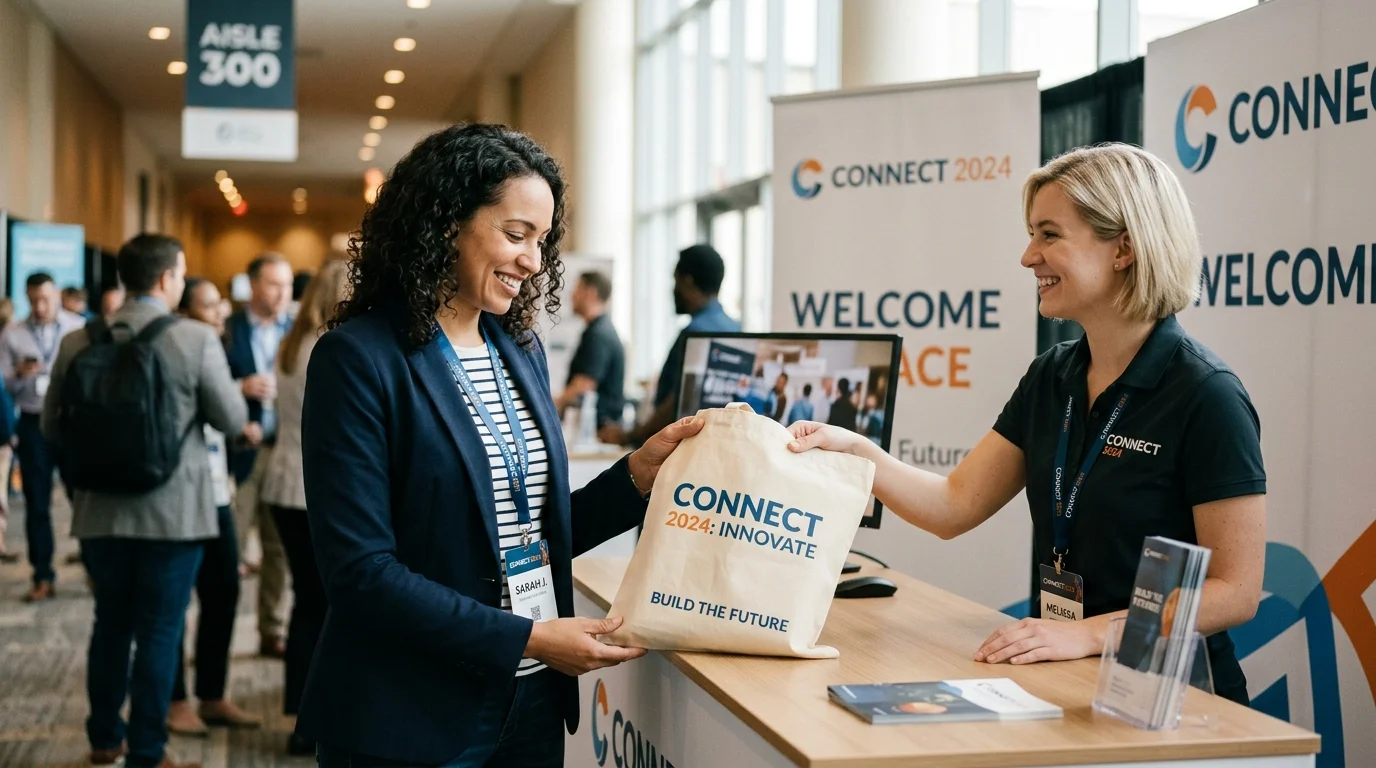
Conference attendees are a more targeted audience. They're usually professionals in your industry. Go a little higher-end here because the cost per qualified lead matters more than raw impressions.
- Hardcover notebooks ($4-7/unit) — people take notes at conferences, and a good notebook gets used for months after
- Branded laptop sleeves ($8-15/unit) — higher cost but extremely high retention
- Quality pens ($2-4/unit for metal pens) — not the cheap plastic ones, a pen that feels good to write with
Employee Gifts and Onboarding Kits
Internal giveaways are different. Your employees already know your brand. The goal is making them feel valued, not creating ad impressions. Spend more per item here.
- Branded apparel ($12-25/unit) — hoodies, quarter-zips, quality t-shirts that people actually want to wear
- Insulated lunch bags ($8-12/unit) — practical and used daily
- Welcome kits combining a notebook, pen, bottle, and sticker pack ($20-35 total) — first impressions matter for new hires
Customer Appreciation and Thank-You Gifts
These should feel personal, not promotional. A branded item with a handwritten thank-you card outperforms a generic swag box every time. Think about what your specific customers would use.
- Premium drinkware ($8-15/unit) — a nice tumbler or coffee mug
- Desk organizers or wireless charging pads ($10-18/unit) — items that live on their desk and keep your brand in view
- Seasonal items like branded umbrellas ($7-12/unit) or blankets ($15-25/unit) — more memorable because they're not typical promo fare
How Much Should You Spend Per Item?
The right budget depends on who's getting the item and what you're trying to accomplish. Here's a rough framework:
| Audience | Budget Per Item | Goal |
|---|---|---|
| Mass trade show traffic | $1-5 | Brand awareness, booth traffic |
| Qualified leads at events | $5-15 | Brand recall, follow-up conversations |
| Existing customers | $10-25 | Retention, loyalty, referrals |
| Employees | $15-50 | Morale, culture, retention |
| VIP clients or partners | $25-75+ | Relationship building |
A common mistake is blowing the entire budget on 5,000 cheap pens instead of 500 quality water bottles. The pens might cost $0.50 each, but most end up lost or trashed within weeks. The $5 water bottles cost 10x more per unit, but each one works for you 10x longer. Do the math on cost per impression, not cost per item.
Items to Avoid (and Why)
Some promotional items have stuck around for decades purely out of habit. That doesn't mean they work.
- Cheap plastic pens — everyone has 40 of them already. Yours won't stand out.
- Keychains — most people already have a keychain they like and won't swap it for a branded one.
- Stress balls and fidget items — fun for 30 seconds, then they sit in a drawer forever.
- Lanyards — useful only at the event itself. After that, straight to the junk pile.
- Magnets and coasters — too small to notice, too generic to care about.
The exception: if you can make a traditionally boring item remarkable. A pen that writes beautifully and feels premium in the hand is a different story from a plastic barrel pen. Context and quality change everything.
How to Order Without Overpaying
Promotional product pricing drops sharply with volume. A stainless steel tumbler might cost $12 each at 25 units but $5.50 each at 500 units. If you know you'll need items across multiple events in a year, order once in bulk rather than placing several small orders.
Get samples before committing to a large order. Most suppliers will send one or two samples for free or at cost. Hold the item, test the print quality, run it through the dishwasher if it's drinkware. A promo item with a logo that fades after two washes defeats the purpose.
Watch out for hidden costs. Setup fees ($50-75 per design), rush charges, and shipping on heavy items like ceramic mugs can add 20-30% to your final cost. Ask for a fully loaded quote before you compare suppliers.
Make Your Giveaway Item Work Harder
The item itself is only half the equation. How you present and distribute it affects whether people keep it or toss it.
- Pair the item with a reason. “Thanks for stopping by our booth” is forgettable. “We made this notebook for people who still prefer writing things down” tells a story.
- Don't hand them out like candy. If everyone walking past your booth gets one, the perceived value drops to zero. Create a small barrier: a quick demo, a badge scan, a short conversation.
- Include a QR code or short URL on the item that links to something useful, not just your homepage. A resource page, a discount code, or a free tool gives people a reason to engage.
Your Next Step
Pick one upcoming event or campaign and choose a single item to test. Go with a quality water bottle or tote bag if you're not sure where to start. Order samples from two or three suppliers, compare the print quality, and place your bulk order at least 4-6 weeks before the event date. Track how many you hand out and follow up with leads to see if anyone mentions the item. That data tells you more than any industry report.