Home Depot and Lowe's sell most of the same products at similar prices. But each store does certain things better than the other. If you're planning a project and wondering where to spend your money, this category-by-category breakdown will help you decide.
The Quick Verdict
If you want the short answer before the details:
| Category | Slight Edge | Why |
|---|---|---|
| Lumber and building materials | Home Depot | Larger selection, more in stock |
| Power tools | Home Depot | Exclusive Milwaukee and Ryobi lines |
| Paint | Lowe's | Sherwin-Williams and Valspar options |
| Appliances | Lowe's | Better in-store displays, more delivery options |
| Flooring | Tie | Similar selection, similar pricing |
| Outdoor and garden | Home Depot | Larger garden centers in most markets |
| Bathroom fixtures | Lowe's | More style variety at mid-range prices |
Both stores are strong overall. The differences are real but not enormous. Here are the details.
Lumber and Building Materials
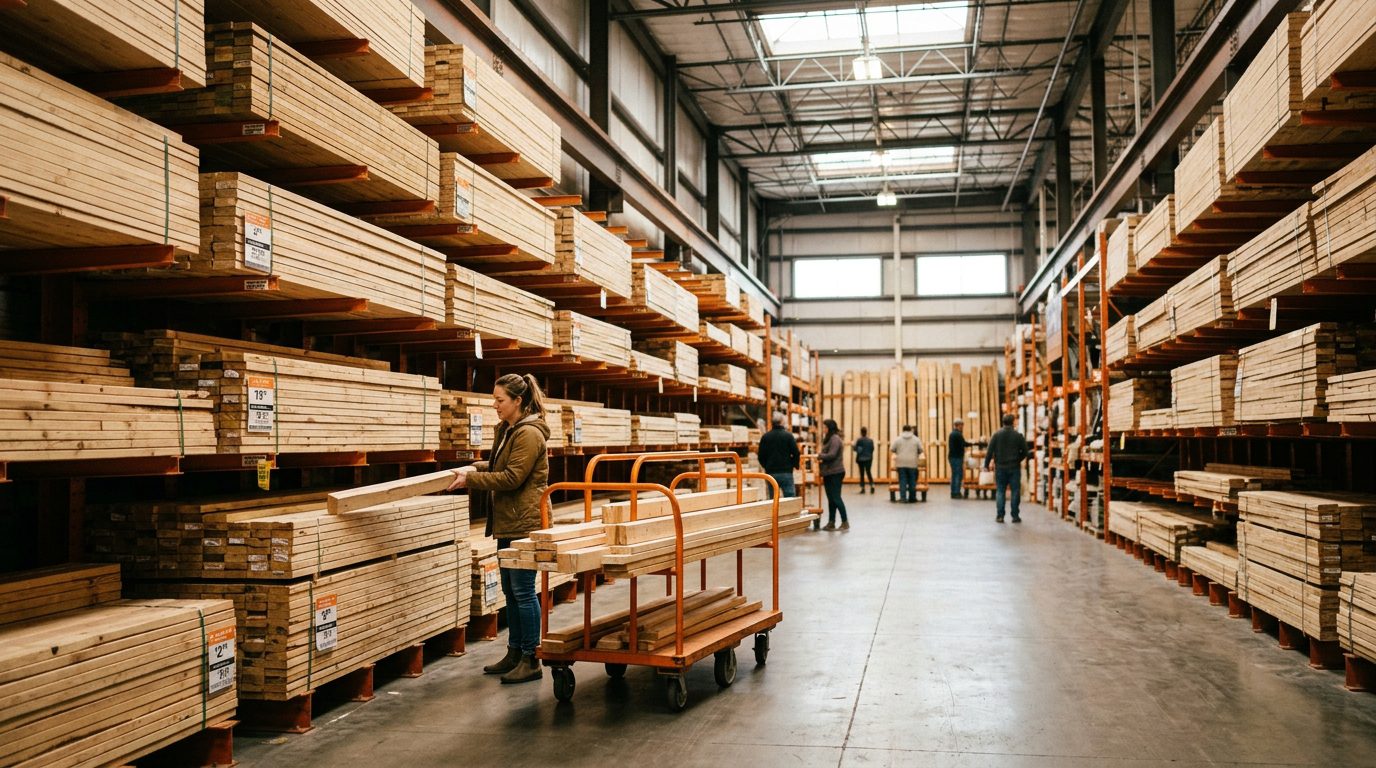
Home Depot carries a wider selection of framing lumber, plywood, sheet goods, and specialty building materials. If you're framing a wall, building a deck, or doing structural work, Home Depot tends to have more of what you need in stock. Their stores are laid out with contractors in mind, so the lumber section is larger and easier to get through with a flatbed cart.
Lowe's carries the same common lumber sizes and grades. For standard projects, you won't notice a difference. But for less common items like engineered lumber, specialty plywood, or larger quantities, Home Depot is more likely to have it on the shelf.
Pricing on dimensional lumber is nearly identical between the two stores. Both adjust prices weekly based on commodity markets. Check both websites before a big lumber order, since one store may be a few cents per board foot cheaper on any given week.
Power Tools
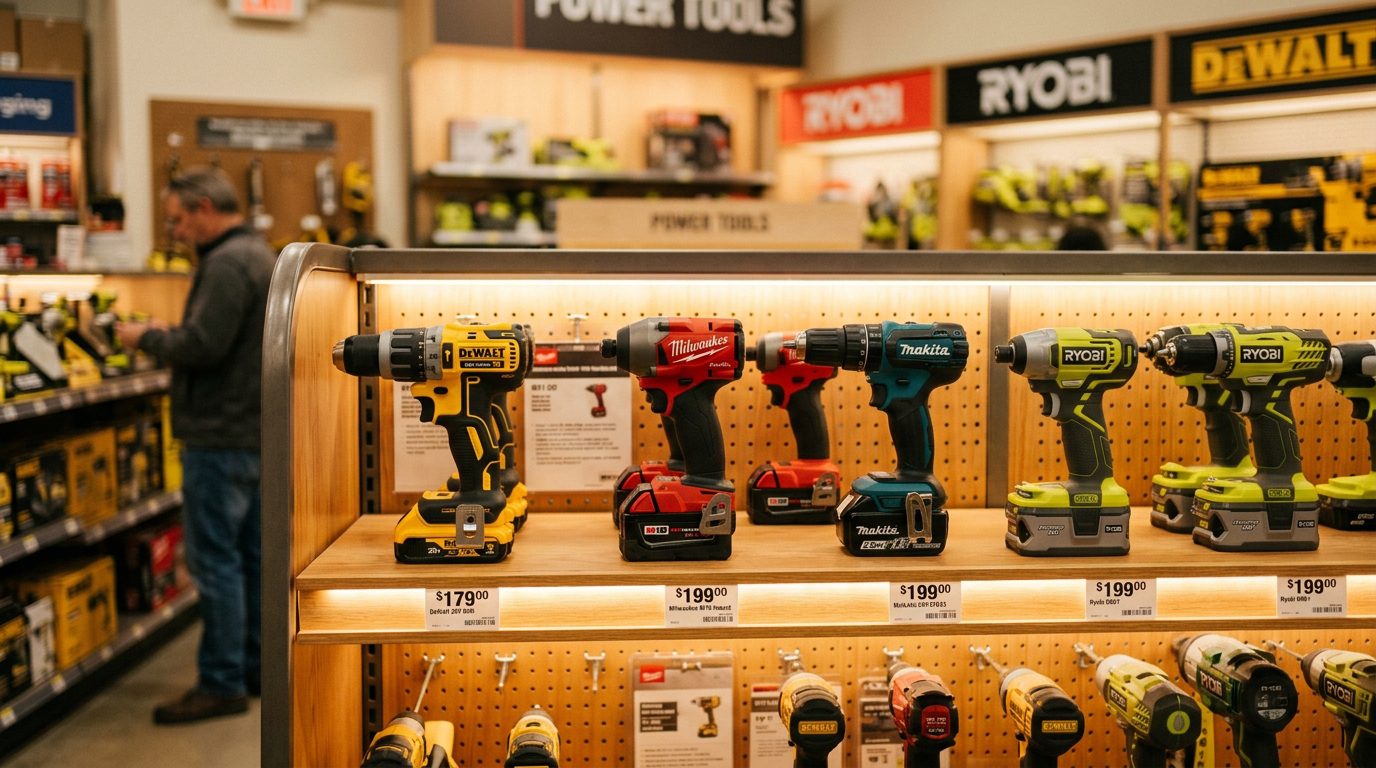
This is where the stores diverge the most. Each one has exclusive brand partnerships that the other doesn't carry.
Home Depot carries Milwaukee and Ryobi exclusively. Milwaukee is popular with professionals for its M18 cordless line. Ryobi's ONE+ system is one of the best values in cordless tools for homeowners, with over 300 tools that share the same battery platform.
Lowe's carries Craftsman and Kobalt exclusively. Craftsman has strong name recognition and a solid warranty program. Kobalt's 24V Max cordless line is a decent mid-range option.
Both stores carry DeWalt and Bosch.
If you already own cordless tools, stick with whichever store carries your battery platform. Switching ecosystems means buying all new batteries, and that's where the real cost lives.
Paint
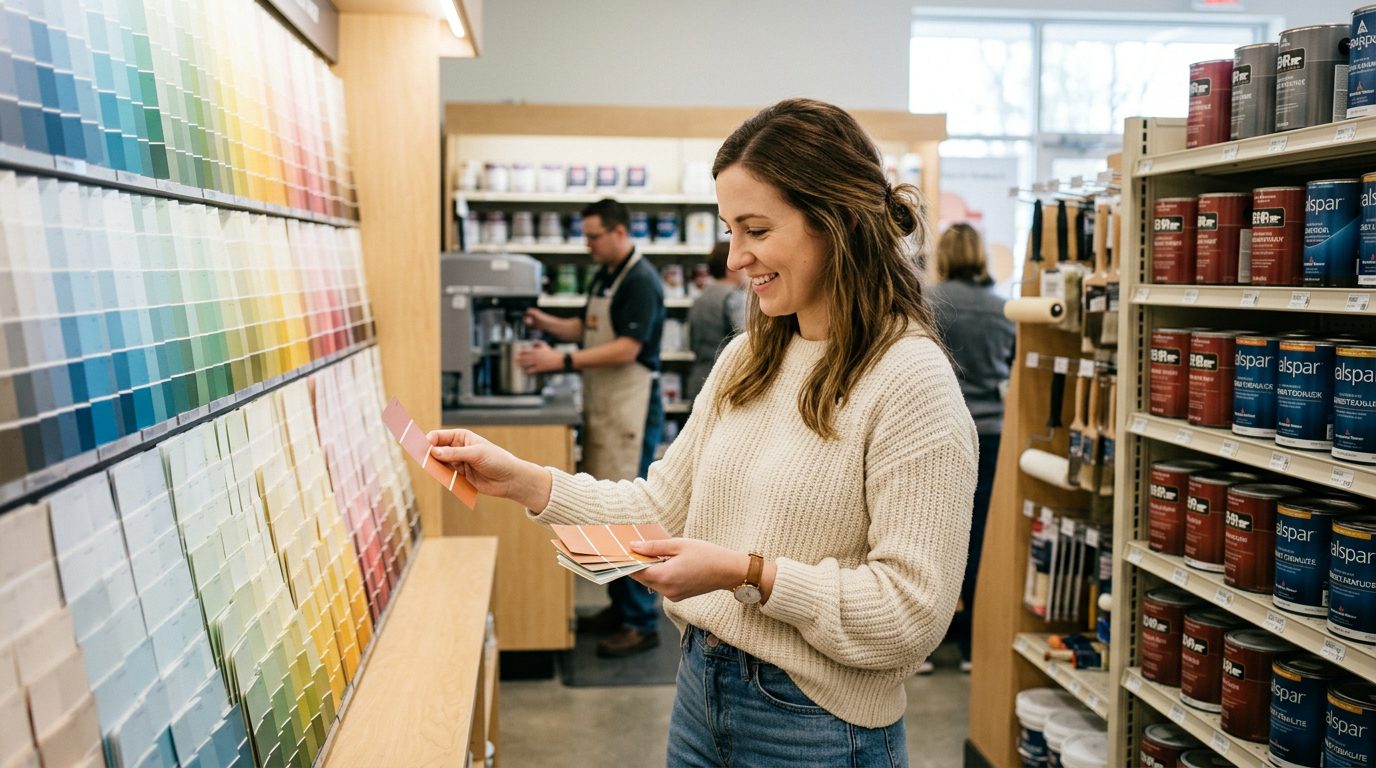
Home Depot's main paint brand is Behr, which is exclusive to their stores. Behr performs well in independent testing and is priced competitively at $30-$45 per gallon for their premium lines. Behr Ultra and Behr Dynasty are consistently rated among the best consumer paints available.
Lowe's carries Sherwin-Williams (through the HGTV Home line), Valspar, and their own Lowe's-branded paint. Sherwin-Williams has a reputation among professional painters, and having it available at a big-box retailer makes it more accessible than buying from a Sherwin-Williams store.
Both stores offer free color matching and can mix custom colors. The quality difference between top-tier Behr and top-tier Valspar or Sherwin-Williams is minimal for most homeowners. Pick the color you like and buy from whichever store offers it.
Appliances
Both stores carry the same major appliance brands: Samsung, LG, Whirlpool, GE, and Maytag. The prices are usually within $20-$50 of each other on the same model, and both will price match the other.
Where Lowe's pulls ahead is the shopping experience. Lowe's appliance sections are typically laid out with more room, better lighting, and working demo models. Their delivery and installation scheduling tends to be more flexible, with more available time slots in most markets.
Home Depot's appliance selection is comparable, and their website sometimes has online-exclusive models or bundles that Lowe's doesn't match. If you're buying a single appliance and you know the exact model you want, price-check both stores and buy wherever it's cheaper (or wherever delivery timing works better for you).
Flooring
Both stores carry a wide range of hardwood, laminate, luxury vinyl plank (LVP), tile, and carpet. The pricing is close enough that it rarely makes sense to drive to a different store for flooring.
Home Depot's LifeProof LVP line is popular and exclusive to their stores. Lowe's has the Smartcore brand as their exclusive LVP option. Both are solid products in the mid-range price tier. Read reviews for the specific product you're considering rather than choosing based on which store sells it.
For tile, both stores carry similar options. Home Depot tends to stock more commercial-grade tile and larger format options. Lowe's leans slightly more toward decorative and designer styles. For basic subway tile or porcelain floor tile, you'll find what you need at either store.
Outdoor and Garden
Home Depot generally has larger garden centers. In many markets, their outdoor nursery area covers more square footage and carries a wider variety of trees, shrubs, and annuals. They also tend to stock more landscape supplies like pavers, retaining wall blocks, and bulk materials.
Lowe's garden centers are well-stocked but typically smaller. Their plant selection is good for casual gardeners, but if you're looking for a specific cultivar or a wider range of fruit trees, Home Depot often has more options.
Both stores offer similar plant guarantees (one year on trees and shrubs).
Bathroom Fixtures
Lowe's has an edge in bathroom styling. Their vanity, faucet, and shower fixture selection skews more toward on-trend designs at accessible price points. Allen + Roth (a Lowe's exclusive brand) offers good-looking bathroom furniture and accessories that photograph well and hold up to daily use.
Home Depot carries Glacier Bay (their house brand) and a solid range of Delta, Moen, and Pfister fixtures. The selection is functional and covers all price points, but the design options lean more traditional.
For a bathroom remodel where aesthetics matter, Lowe's is worth a visit. For a rental property or a straightforward replacement, Home Depot will have what you need.
Return Policies
Both stores offer a 90-day return window for most items. But there are differences in the details.
Both stores extend the return window to 365 days if you pay with their store credit card (Home Depot Consumer Credit Card or Lowe's Advantage Card). That's a big help if you're buying materials for a project you won't start for a few months.
Both stores accept returns on most opened items, with some exceptions for custom orders, cut materials, and hazardous products. Both are generally reasonable about returns and don't make it difficult.
Pro Programs
Home Depot's Pro Xtra program offers volume pricing, purchase tracking, and a tiered rewards system that gives you credits toward future purchases. It's popular with contractors who spend tens of thousands at Home Depot annually.
Lowe's MyLowe's Pro Rewards program is structured similarly, with tiered benefits based on annual spending. Both programs are free to join and worth signing up for if you're doing regular project work, even as a homeowner.
The rewards rates are comparable between the two. If you're already spending at one store, there's not enough difference in the pro programs to justify switching.
Store Experience
Lowe's stores tend to feel brighter and more organized. The aisles are wider, the signage is cleaner, and the displays look more polished. If big home improvement stores overwhelm you, Lowe's is usually the more comfortable option.
Home Depot stores can feel more warehouse-like. The layout is denser, the inventory is deeper, and the vibe is more “working store” than “showroom.” Contractors tend to prefer this because it means more product on the shelf and faster in-and-out trips.
Neither is better overall. It depends on whether you prefer a showroom or a warehouse.
The Bottom Line
Shop at whichever store is closer for everyday purchases. For specific categories, drive the extra few minutes: Home Depot for lumber, power tools, and garden; Lowe's for paint selection, appliances, and bathroom remodels. For anything over $100, price-check both stores before you buy. They match each other's prices, so ask at the register and you'll get the lower one.